Note of a recent US overseer meeting are posted below. WINGS posts these notes because of our concerns about the ongoing failure to properly address CSA issues. An analysis of the meeting notes by Perplexity, an AI system, summarises these concerns :
- Minimization of Allegations: The discussion around the return of an individual with allegations is concerning. The seriousness of the situation appears downplayed (“not a crime to be weird,” “taking pictures of children and families”), with more emphasis on being able to answer critics than on child safety or transparency. The reliance on an unnamed “man in California” for assessment, rather than formal child protection professionals, raises questions about the adequacy of safeguarding procedures.
- Insularity and Dismissal of Criticism: There is a tendency to characterize critics as unsatisfiable or as lacking faith, and to dismiss external concerns as “echo chamber” talk. While some self-reflection is present, the overall tone suggests defensiveness rather than openness to substantive reform or outside accountability.
- Hierarchy Justification: The defense of hierarchy is largely scriptural and anecdotal, with little discussion of the practical implications for transparency, accountability, or abuse prevention. Historical doctrinal issues (like LWD) are acknowledged but quickly dismissed as no longer relevant, without detailed examination of their legacy or impact.
- Lack of Victim Perspective: The conversation focuses on the accused, the workers, and the church’s reputation, with minimal attention to the experiences or needs of victims or survivors of abuse. Jokes and laughter about serious topics may indicate a lack of sensitivity to these issues.
- Echo Chamber Risk: The group’s own use of the term “echo chamber” (even if jokingly via ChatGPT) highlights the risk of insularity and groupthink, especially when facing significant external criticism.
Conclusion: The meeting notes reveal a leadership group grappling with criticism, doctrinal challenges, and allegations of misconduct. While there is some evidence of self-awareness and scriptural engagement, the overall approach appears more focused on internal cohesion and reputation management than on robust safeguarding or meaningful engagement with dissenting voices and victims. This raises ongoing concerns about transparency, accountability, and the prioritization of member safety.
The overseer meeting notes were formatted and Released by Abbi & Mike Prussack / 2×2 Church Updates. The notes have been confirmed to be legitimate. While much of the discussion is paraphrased, with some verbatim quotes, the note-taker did their best to accurately capture the context of what was spoken.
Overseer Meeting Notes March 25, 2025
The following notes were taken by an attendee of an overseer Zoom call in March of 2025. Speakers are identified by name only when the attendee was positive of who was speaking.
There were a total of 17 people on the call.
Known attendees (last name given only if it was able to be confirmed)
Barry Barkley (Former overseer, senior worker)
Brian Getz (WA/N. ID/AK senior worker)
Dale
Darryl Doland (WA/N. ID/AK overseer)
David
Jay Wicks (Oregon senior worker)
Jon
Merlin Affleck (B.C. overseer)
Mike
Larry
Ray Hoffmann (New York/New England overseer)
Richard DenHerder (China/Asia overseer)
Rob Newman (CA/AZ/HI/Pac. Isl. overseer)
Wayne
Pre-meeting
- General chatter about the friends and where attendees are staying.
- Discussion of health conditions of some of the friends.
- Ray reported he was in NY City but would be leaving for special meetings.
- Confusion regarding one of the attendees. Darryl surmises it could be Richard.
- Someone said “Just as long as it’s not Cynthia.” *laughter*
- Unknown attendee later determined to be Jon.
Meeting
- Discussion with Rob regarding arranging the return of someone with allegations to meeting. (Believed to be referring to Name Redacted)
- Rob was asked if there were children in the meeting. He responded that he wasn’t sure. He checked and confirmed that there is a family in the meeting with children.
- Rob was asked if they had consulted any professionals to see if he was safe. Rob responded that he went through a man in California that they’ve used before. He said his finding was that he was a low concern.
- Response from person asking was that it was good to be able to have an answer for the friends who would ask questions, or the critics.
- Rob said the most serious thing that happened was taking pictures of children and families.
- Someone mentioned that he was just one of those strange personalities.
- Someone else mentioned that it wasn’t a crime to be weird. *laughter*.
- Someone quoted Willie Jamieson as saying “If I’m going to err, I’d rather err on the side of mercy, make sure I’m not part of the problem.”
- Rob was asked if he’s been in any meetings at all. Rob responded that he hasn’t been in any so far.
- Rob mentioned that his elder and elder’s wife have been very supportive through the situation and they know him better than anyone.
- Confirmation was given of his (perpetrator’s) wife being very loyal.
- Someone mentioned that the alleged perpetrator was one of the names put on a list by Bridging the Gap, and they’d listed their overseers on it as well. (Believed to actually be referring to lists by Pamela Walton)
- Someone asked for clarification that they had actually published a list.
- Response: “Well, that Jenn Tschetter did, whatever she’s on.” (Jenn included Pamela’s list in a recent weekly newsletter)
- Richard DenHerder asked if they were serious offenders or not serious offenders.
- Someone responded that it was a little of everything.
- Someone else said that they had gone through a process and were deemed safe to be in meeting again. But that others spin it in a way that makes it sound like they are putting a bunch of dangerous people in meeting.
- Same person said it was all carefully done.
- Richard says that Bridging the Gap had done a bunch of sessions on exposing the Truth.
- Richard explained that he had taken transcripts from all of the sessions and was in the process of using ChatGPT to process the transcripts because he doesn’t have time to listen to all of it.
- He is using ChatGPT to determine all the complaints against the church and about doctrine.
- Richard mentioned that lots of the friends are listening to those sessions and it’s good to know what they are being fed.
- Richard says that so far ChatGPT had said “warning: echo chamber” *laughter*
- Someone says “So a robot is smarter than they are.”
- Richard says he thinks the word is “honest”.
- Rob says the offender is not in meetings yet. The elder and his wife were going to wait until after special meetings to approach him about returning to meetings.
- Darryl asks Richard if there was much mentioned in the Bridging the Gap videos about hierarchy.
- Richard confirms this and offers to send everyone the summary from ChatGPT.
- Darryl talks about recent reading in Revelation about John talking to an elder. He uses this to note that there’s even hierarchy in heaven.
- Darryl says that people are saying that ideally there would be no hierarchy, but even John’s vision of heaven had hierarchy.
- Ray mentions Michael the archangel and how that seems like hierarchy to him.
- Someone chimes in that it just comes down to having order.
- Richard mentions that you see hierarchy in the body. If everything was equal we would just be a blob. And that he’s sure the foot enjoys the hand scratching it when it itches.
- Richard says that one of the complaints they had was about the LWD (Living Witness Doctrine), which he quickly says they (the workers) don’t believe.
- Richard mentions that the LWD (Living Witness Doctrine) did come up in the church at one point in history but was “cleaned away”.
- Someone asks what LWD is.
- Richard responds that it’s the belief that eternal life is only gotten through the workers, and that the truth is an unbroken line back to Jesus.
- Ray recounts a story of someone who contacted him and wanted to attribute the origins of the truth to William Irvine.
- Ray says his response to this person was to ask if he’d be satisfied if he gave him the name of the person who brought the gospel to William Irvine? Or if he’d be satisfied if he gave him the name of the person who brought the gospel to the person who brought the gospel to William Irvine? Etc.
- Ray said he answered for the person, no, you wouldn’t be satisfied until I could give you names that go all the way back to Peter, because you have no faith.
- Someone mentioned that George Walker had said that if LWD was true then he’d have to deny his own testimony.
- Richard said that they (people on Bridging the Gap) say that you don’t need to go to meeting to serve God, or they say they have better fellowship outside of meetings. He then says this is not scriptural.
- Someone says quote of “by one spirit we are all baptized unto one body”
- Someone else quotes Malachi “those that love the Lord spoke often one to another”
- Someone else quotes Psalm 50 “gather my saints together for those who have made a covenant with me through sacrifice.
- Ray says “don’t forsake the assembling of yourselves together”
- Richard says one complaint they (Bridging the Gap) had was that the workers pick and choose Matthew 10.
- Darryl says that they have a list, and that some of the things they say we don’t do, he begs to differ.
- Darryl says that they say the workers only do 18% of the things described in Matthew 10. But that’s not the percentage he came up with.
- Darryl is asked where that came from, he thinks it was on CCF, but may have originally been on Bridging the Gap.
- Richard said that on Bridging the Gap they had said there was no need to go 2×2, but the verse they quoted was where it said to send Paul and Barnabas. *laughter*
- Someone says Henry Moore’s answer to this was “we do greater works”.
- Speaker clarifies that Henry was an old Irish worker.
- Merlin says he’s up in Northern BC and he’ll admit he has a couple coats (referencing the previous discussion about the claim that workers don’t follow Matthew 10 where it says “Nor scrip for your journey, neither two coats, neither shoes.” *laughter*
- Someone says that one of the friends, after reading Matthew 10, had said it just sounds to them like “don’t take more than you can carry around.”
- Same person says people are always looking for what they can get, and we (the workers) are always looking for what we can get rid of.
- Someone said that a man had been coming to their meetings and his companion had spoken in a meeting on Matthew 10 and after the meeting the man came up to him and said that he now saw that the workers are the apostles. He had gotten that revelation just sitting in the meeting.
- Darryl said another thing they have a problem with is “go not house to house”.
- Darryl said that when this was brought up, Craig Stockwell mentioned that buddhist monks go house to house looking for money and people don’t like that, and that’s not what Jesus was recommending.
- Darryl then said there are other places where it does talk about apostles going house to house.
- Someone mentions that before that it says “if they receive you, remain in that house…” and they go on to say that if there’s a mission, there’s a need. They also said that they sometimes leave sooner than they should because of their fear of being a burden in the home they are staying. Says this happened more in the past than it does now.
- But they finish by saying that this wouldn’t satisfy the nay-sayers, we don’t need to satisfy them.
- Rob says the dissenters have a great motivation to discount the ministry because if they don’t discount it they fall into that group of people that Jesus said “it would be far better for Sodom and Gamorra, than to reject those that he had sent.”
- Someone else says that nothing will ever make them happy.
- Someone says there’s a large group of the friends who are solid and don’t need any help, and there’s a large group of people who are not “part of us”, but it’s really all about the ones who are right on the edge of those two groups. That maybe they can help one or two of those, not with reasoning, but with clarity given by the workers it can help them come back.
- Same person says there’s not much you can do with the info from Bridging the Gap, but it’s nice to know what is said.
- Someone said that they had a lady in their field who was in this position, and God woke her one night and told her she was drinking poison. So the Lord is well able to rescue those who want to be rescued.
- Someone else says the Devil uses a little bit of truth to bait us to catch us in a lie. He tried it on the Lord, he used scripture.
- Ray mentions the stones between the cornerstone and the headstone. He references something that Barry had said at an earlier time, that sometimes the stones in between just need to be discarded.
- Barry recounts a time that George Walker invited him to his room at a convention in Ohio and he said that if a few shingles blow off a roof, that can be repaired. But if a disease gets into the foundation stones, that will be felt through the whole building. To fix it you may have to set a few good stones aside until you can get down to the one that’s crushed, and build up again. But what it comes down to is that it’s up to the Lord.
- Ray says to think about how we felt when we were called. We had no clue what the future would hold, but were willing for whatever Jesus had planned for the ministry. References spirit that young people have when they first start out, total submission to the rock. Versus the spirit of resisting the rock like the dissenters.
- Someone relayed a story of a couple he had stayed with who told them their testimony. They had been going to another church and the pastor had mentioned that workers were in the area and that people should use their discernment when interacting with the workers. They prayed to have discernment and had invited the sister workers over. They said that as soon as they opened the door, they knew that they were the servants of God.
- Barry relayed a story told by Jack Jackson. Jack had said that he had told the sisters in the early days not knowing the language, that God would use what they were more than what they say.
- Ray spoke about the parable of the treasure hid in a field, and that it does seem that God is hiding that from a lot of people. He mentioned in Jesus day that when the blind were made to see and the deaf to hear, thatJesus always told them not to tell anyone. The people who are worried about a hierarchy and all, they are missing the hidden treasure.
- Ray says they have reduced Jesus down to CSA and are missing the treasure.
- Someone talks about how they were talking about Truth in gospel meeting and how it’s the same everywhere in the world. He had said in his sermon that he had been in Asia, in various countries, and they could have fellowship due to all having received Truth. The call-in number for the gospel meeting hadn’t been muted, and someone listening had said “That was a waste of money (the flights around Asia), they could have taken that and given it to the victims.” *laughter*
- Darryl says “stop the heart and sell the blood” (referencing that the movement of workers among countries is as vital as having a beating heart)
- Someone asks if that’s a Chinese phrase?
- Someone says that circulation is good and is a miracle.
- Someone else says, in reference to hierarchy, that none of them were pressured to go in the work. It was a personal calling.
- Someone else says that none of them asked to be overseers either.
- Someone says that overseers have the privilege of serving servants. “And carrying out a lot of garbage. Save somebody else from the job.” *laughter*
- Someone asks Richard if people in China ask about the West.
- Richard responded with yes. He talked about meeting people and that people talk positively about the West.
- He mentioned that he’s in China on an Irish passport and he often says he’s an Irish citizen to avoid the politics of America.
- Richard talked about a man who owns a coffee stand who likes to talk. The man asked him if he thought there is a deep state controlling the world. Richard said no, that the only one in control is God. The man asked if he believes in God and reads his bible every day and gave a kind of smirk.
- Richard says they are nice people and that they are watching his testimony.
- Richard mentioned tarot cards, that they don’t use that much in China.
- Ray talked about a woman who recently stood up in a meeting, and another lady who they thought would stand but she hadn’t due to a misunderstanding of what testing the meeting meant.
- The lady who recently stood up is 90 years old and is quite tall, and was brought to meeting by one of the friends who is a “midget”.
- Richard mentioned that the Chinese are superstitious, and most of them know it’s quackery. But there are some who have a spirit that they deal with.
- More discussion about fortune telling.
- Discussion about two professing men who had died in a small plane crash. Noted that the plane had been completely compressed, but the man’s bible was found a short way from the wreckage without any damage.
- Meeting adjourned, with discussion of plans to meet again the following week.


 An information evening will be organised for members and ex-members in July 2024. It will be an intense meeting, where a number of victims will also speak. – image: Getty
  The community, which has followers worldwide, remained completely under the radar for a long time. – image: Getty
  Every summer the community in the Netherlands gathers at a conference site. – image: Getty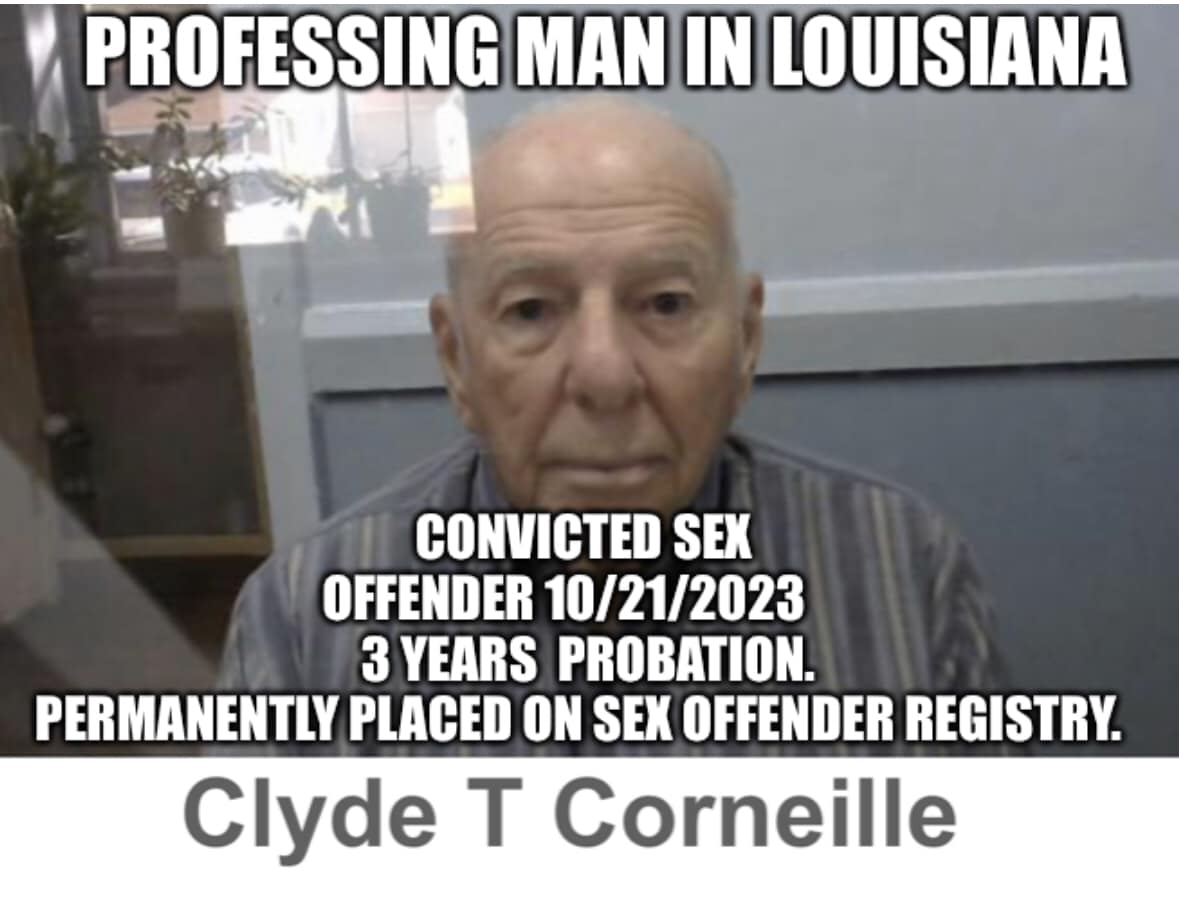

 WINGS for Truth