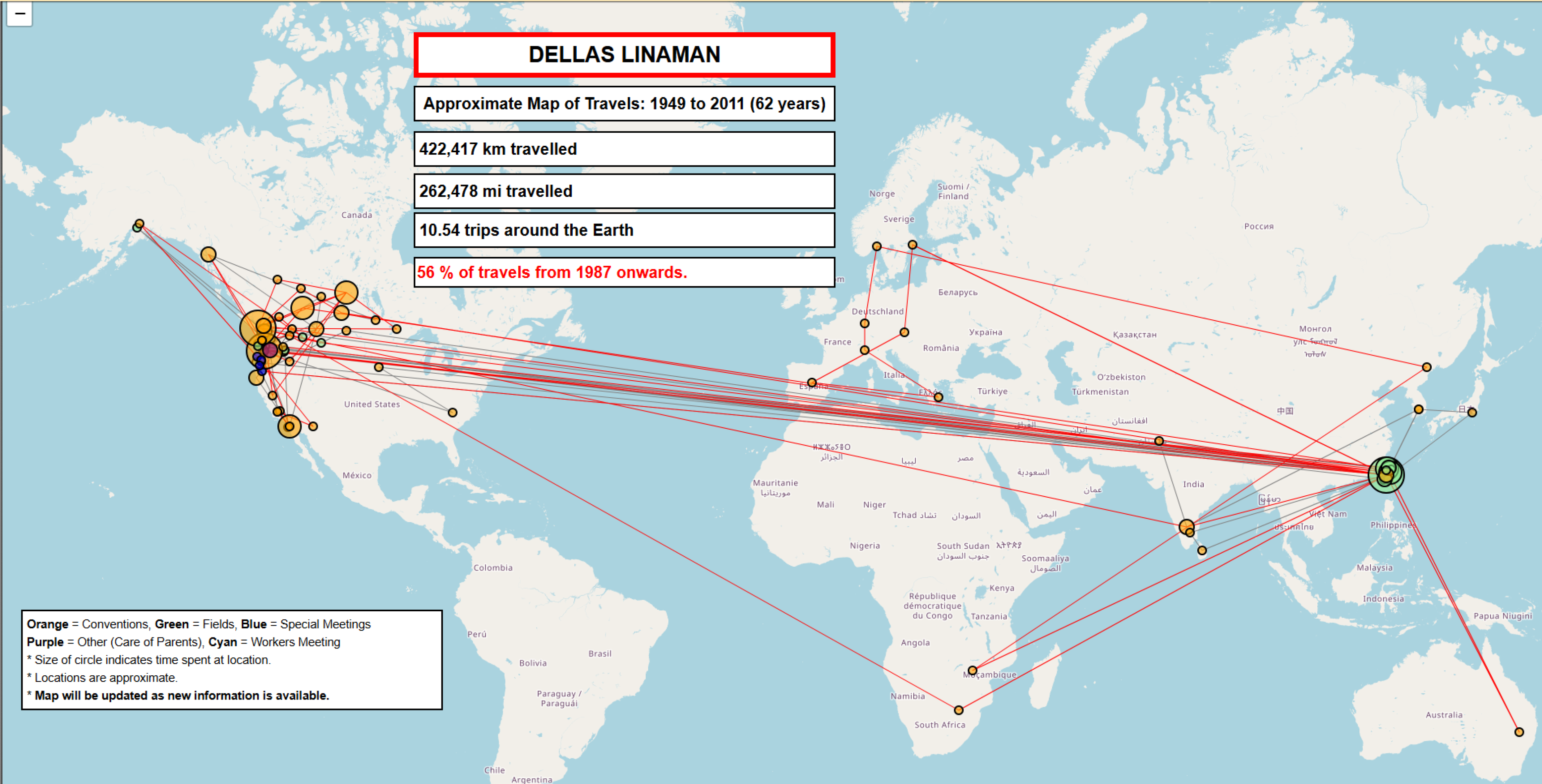
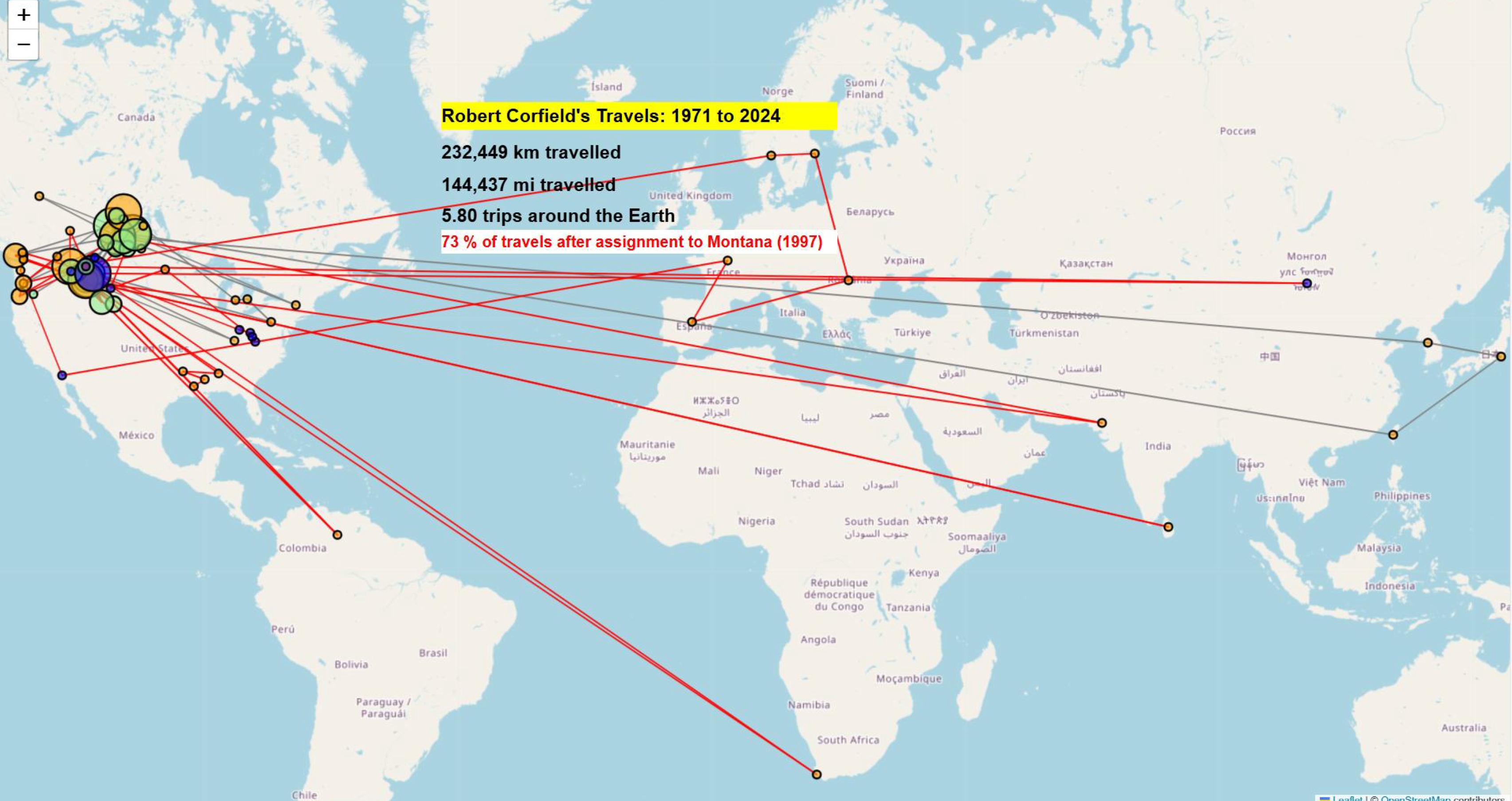
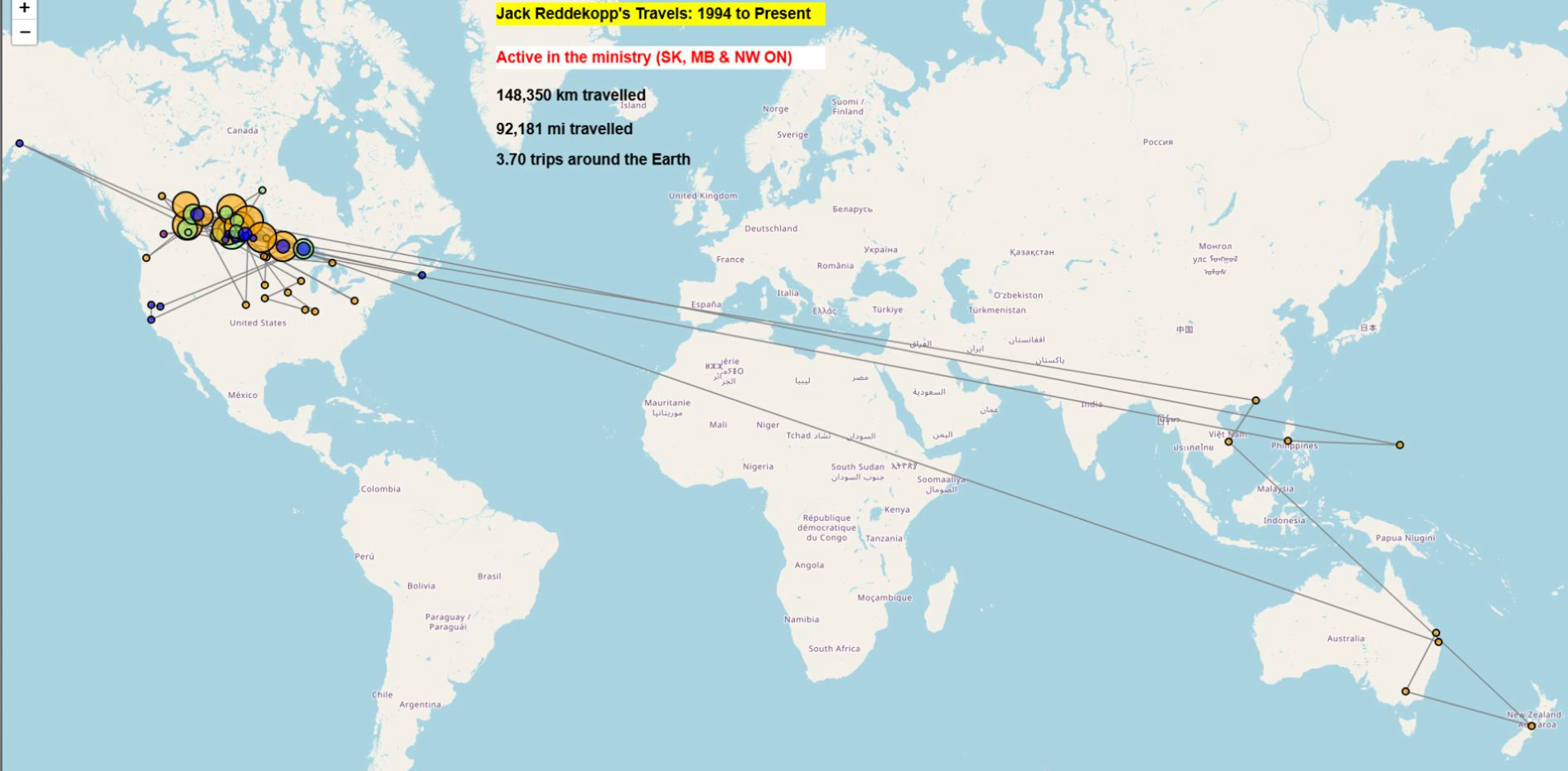
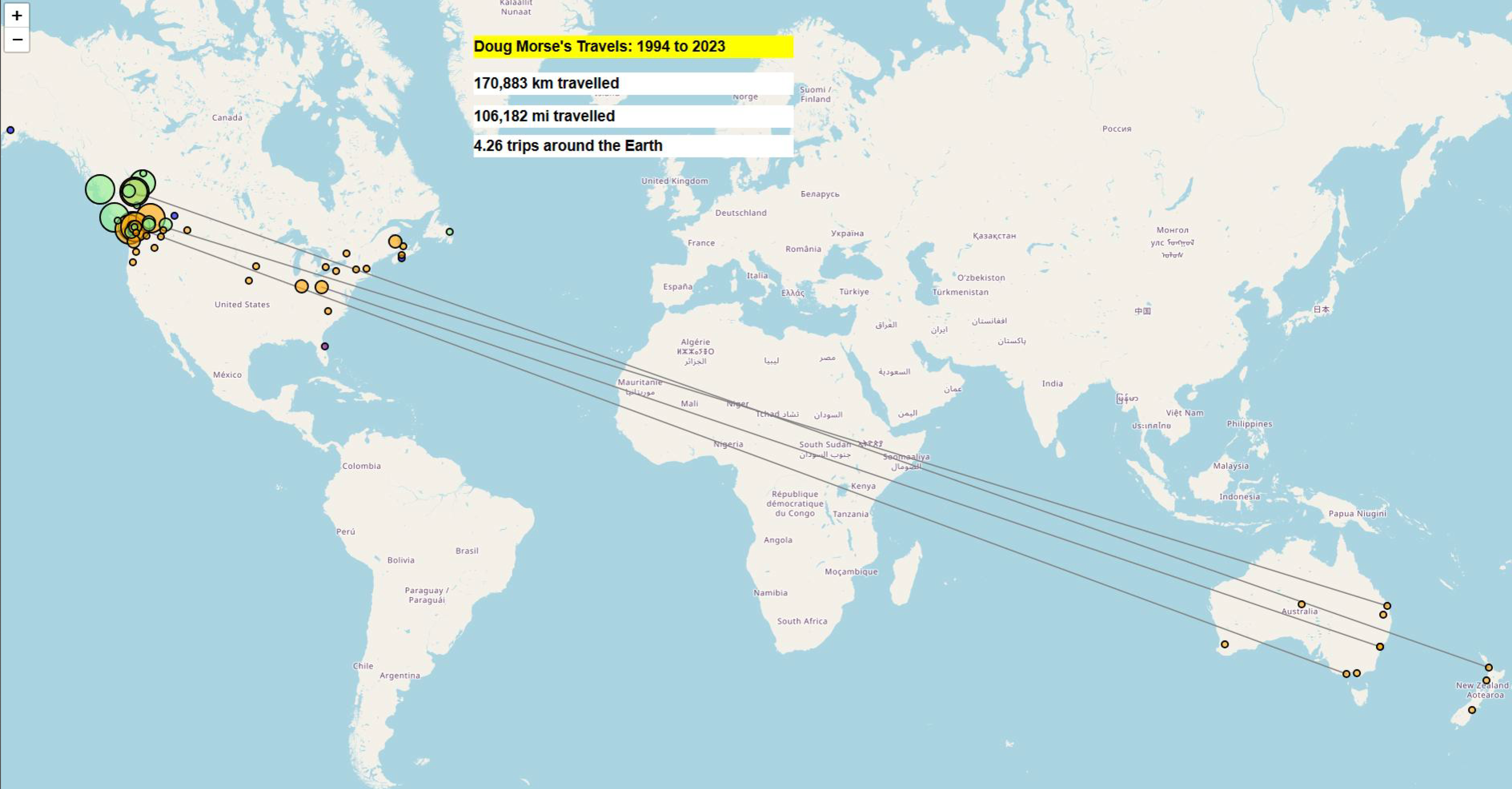
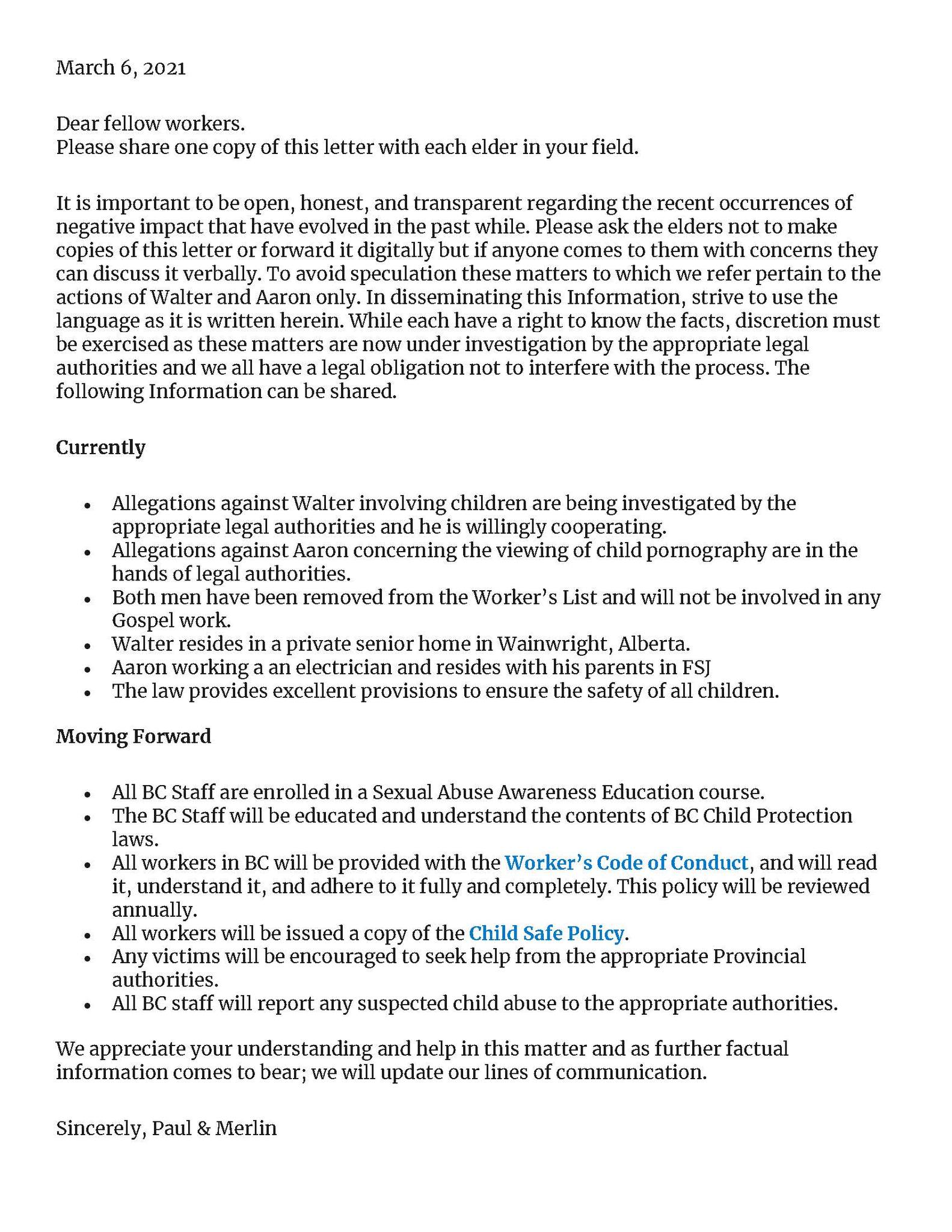
WINGS Note: This is a transcript of a second video posted by Ted Harris, for those who prefer to read rather than watch. It details systemic cover-ups (both historic and recent) that facilitated continued Child Sexual Abuse within the church.
Hi again, everyone. Ted Harris here.
Over the past several years, the evidence surrounding Dale Shultz has continued to grow. Survivor testimony, internal documents, court records, and the accounts of admitted abusers have painted an increasingly disturbing picture.
The first video established that pattern.
It documented survivor accounts, internal correspondence, admitted abusers, and the repeated decisions of church leadership when confronted with child sexual abuse. The evidence led to three unavoidable questions: What did Dale Shultz know? When did he know it? And how did he respond?
This video examines those questions.
As I mentioned in the first video, given the serious nature of what I’m about to discuss, I made an effort to contact Mr. Shultz and give him an opportunity to comment on the material covered in this series.
On May 17 of this year, I sent him an email outlining the subject matter I intended to discuss and invited a response that could be included or referenced. No response was received.
The focus of this video was always going to be the two strongest pieces of evidence exposing Dale Shultz as the corrupt and morally bankrupt leader that he is: the cases of Robert Corfield and Bruce Waddell.
Corfield’s case, in particular, provides direct evidence that Shultz knew an admitted child abuser remained in the ministry, failed to report him, and continued allowing him to stay in the homes of families with children. Waddell’s case raises many of the same questions and, taken together, they provide the clearest window into Dale Shultz’s leadership when confronted with abuse, abusers, and victims.
That was the plan.
Then, I received certain information. New evidence has come to light.
Since releasing Part I, events involving worker Kenion Coleman and Ontario overseer David Lane have provided a remarkable real-time illustration that the attitudes and priorities documented throughout this series are not relics of the past. They are very much alive today.
In addition, two recently released letters—one written by the father of a Ruben Mata survivor, the other by Dale Shultz himself—provide an extraordinary window into the priorities and institutional thinking that shaped these responses. Read together, they help explain not only what happened, but why these patterns repeated for so many years.
Before turning to those events—and then to the cases of Robert Corfield and Bruce Waddell—I want to mention something I have struggled with throughout this project and the others before it: conveying the true scale of what has taken place within this movement over many decades.
The original goal was to examine one overseer. But once you begin pulling on that thread, it leads to another survivor, another internal letter, another cover-up, another overseer, another country. Before long, you realize you are no longer writing about one man. You are describing an entire system.
That scale is difficult to communicate because it eventually becomes overwhelming. Another victim. Another predator. Another cover-up. Not because each story matters less, but because the sheer volume begins to numb the mind. For many people, especially those still emotionally invested in the fellowship, accepting one case is painful enough. Accepting that it is part of a much larger pattern is something else entirely.
That is why understanding the system matters every bit as much as documenting the individual cases. Without that, all we are left with is an endless list of names.
With that in mind, let’s begin with what happened over the past week.
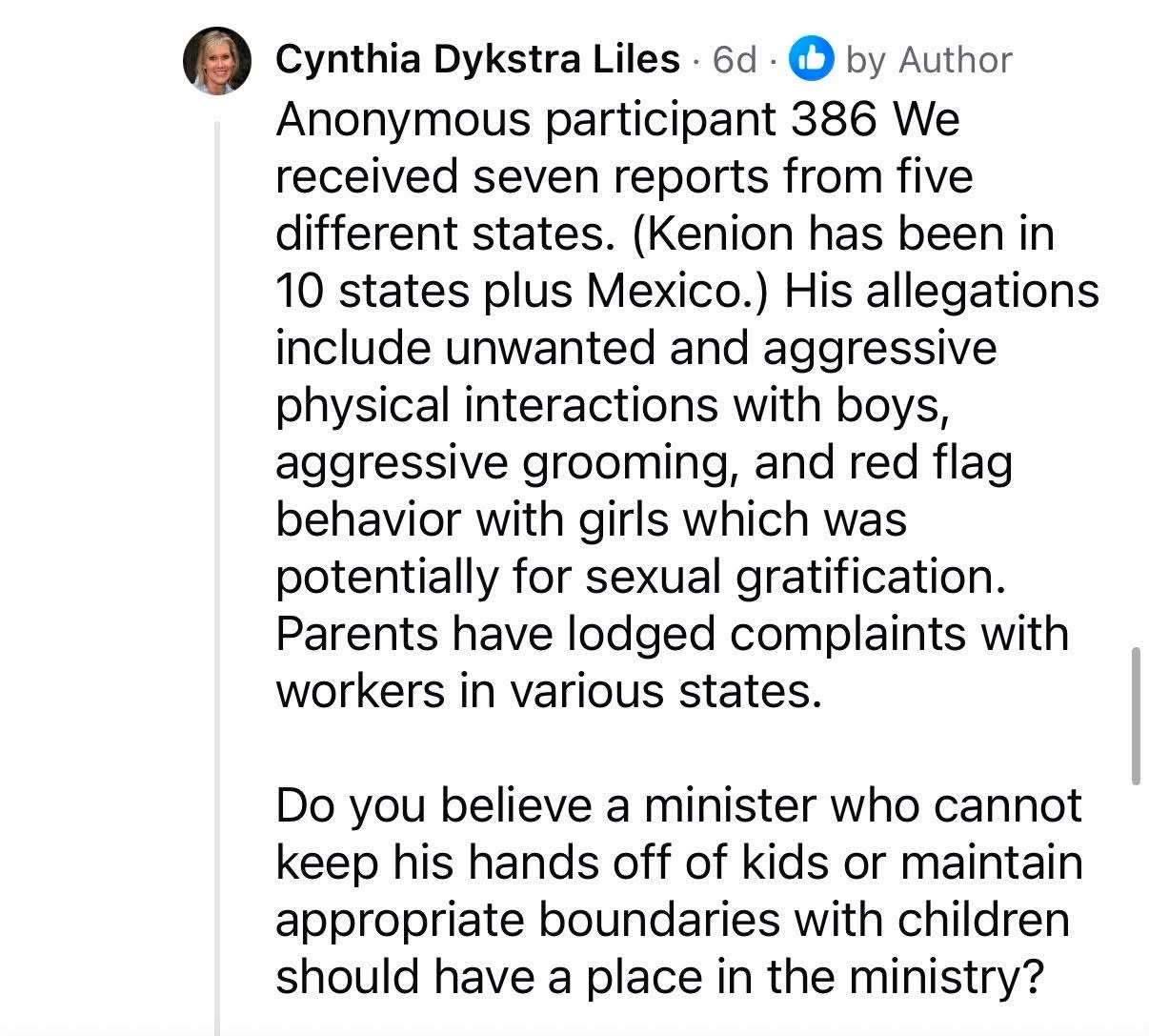
The worker Kenion Coleman has been the subject of multiple vetted allegations, including unwanted and aggressive physical contact with boys, inappropriate grooming behavior, and attempts to observe girls in states of undress within their own homes.
While there are currently no known allegations of sexual abuse against Coleman, the allegations that do exist are extraordinarily serious. They describe conduct that, in any system with real accountability would be disqualifying—especially for a minister who routinely stays in the homes of families with children.
Coleman has also been moved repeatedly throughout his ministry, serving in ten different states as well as Mexico. By itself, that proves nothing. Workers do move. It’s the nature of this ministry But viewed alongside the allegations—and the ministry’s well-documented history of quietly relocating problematic workers rather than confronting problems directly—it inevitably raises questions.
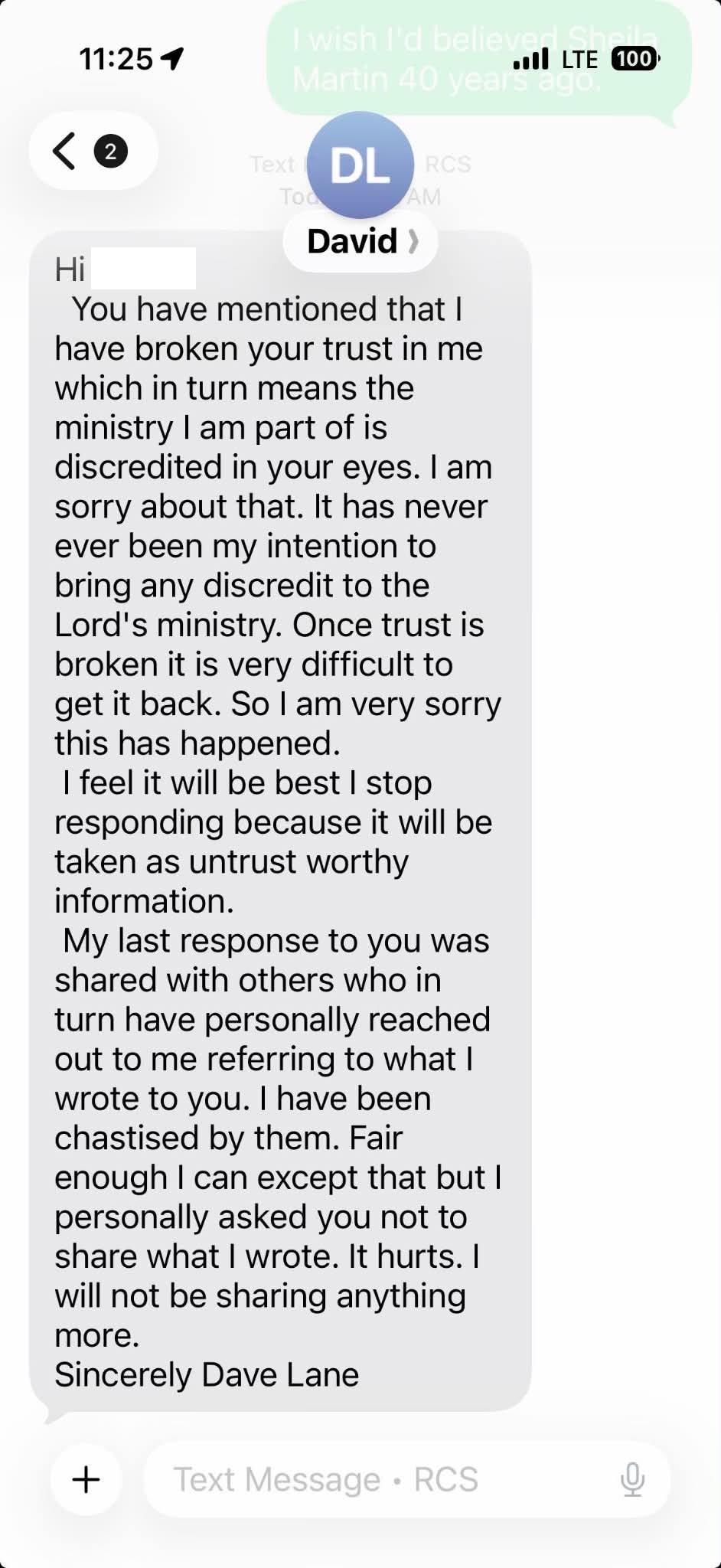
Despite all of this, Coleman was on convention rounds this summer, including Seagrave and Iron Bridge in Ontario. These are multi-day gatherings where workers live, eat, and spend extended time with families and children.
Which brings us to David Lane, the Ontario overseer responsible for staffing those conventions.
When asked whether he was comfortable with Coleman attending given the serious nature of the allegations, Lane replied:
“Going by how the Lord used Kenion to feed our hearts and souls yesterday, I would say the Lord is very comfortable with Kenion. I accept what the Lord is blessing.”
There it is.
I am told Kenion Coleman is regarded as an exceptionally gifted speaker—which, to be fair, tends to stand out in a ministry of largely untrained, uneducated ministers expected to speak extemporaneously. When the same microwaved sermons about the sower and the seed, the children of Israel, and the prodigal son have been reheated for decades and served up as fresh revelation, genuine eloquence is bound to attract attention.
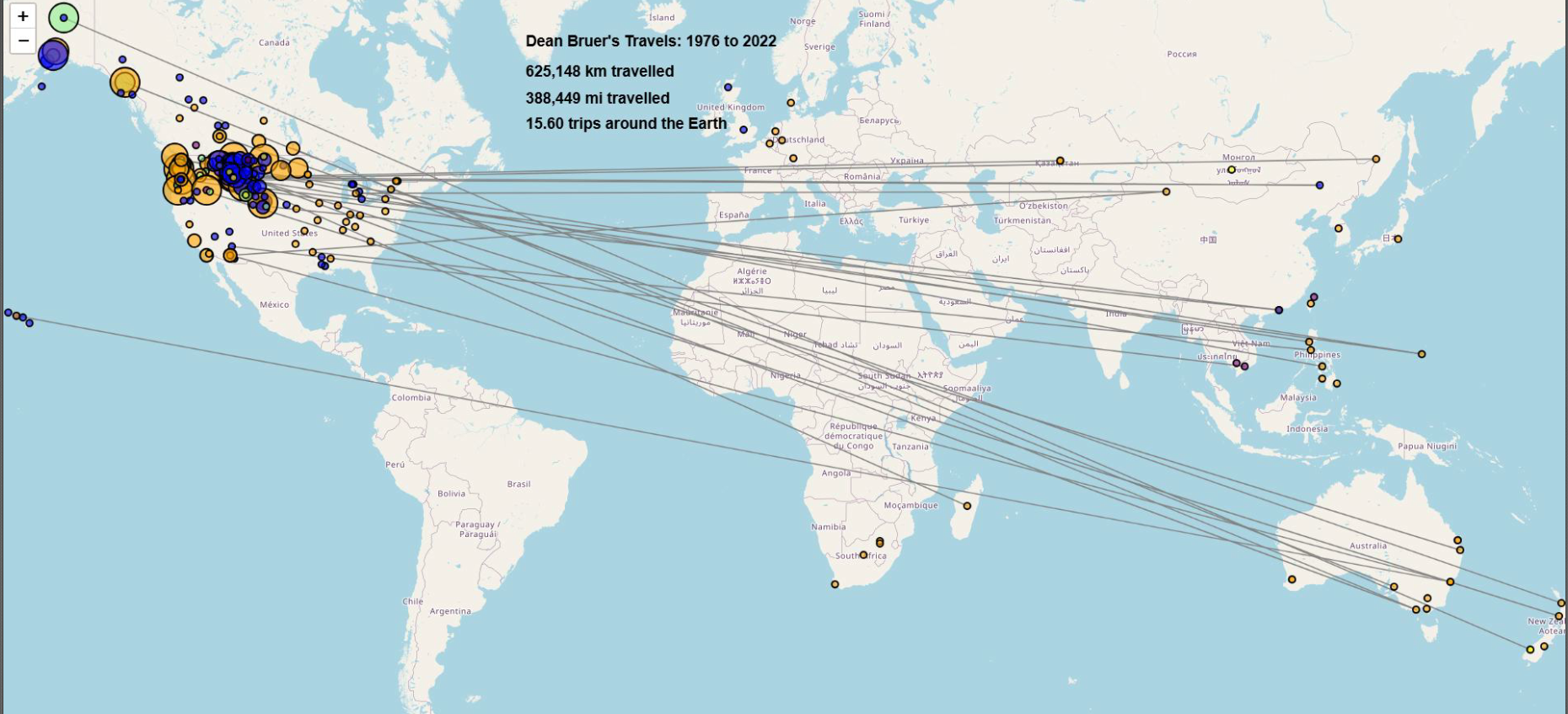
But that is precisely what makes Lane’s response so revealing. In a ministry like this, gifted speakers often acquire an aura of spiritual authority that extends far beyond their actual character. They are treated not merely as effective communicators, but as men uniquely used by God. And history has shown, repeatedly, that some of the movement’s most admired speakers have also been among its worst abusers. Dan Hilton. Ira Hobbs. Dean Bruer. Eloquence is not evidence of abuse, of course. But neither is it evidence of character. If anything, charisma often creates the trust, admiration, and spiritual prestige that make abuse easier to conceal and allegations easier to dismiss.
Yet Lane’s standard was not whether the allegations were serious enough to warrant protecting children. It was whether Coleman had delivered an inspiring sermon. Rhetorical effectiveness became evidence of moral fitness—and ultimately, of divine approval.
That single statement explains far more than David Lane probably intended.
It explains why image so often triumphs over evidence. Why performance eclipses character. Why victims are doubted while respected workers receive the benefit of every uncertainty. Eventually, the ability to appear holy becomes more important than the obligation to be safe.
As someone else later asked Lane: Would he apply that same standard to Dean Bruer? Leslie White? Ira Hobbs? All men regarded by many as gifted speakers who undoubtedly delivered messages people found uplifting and spiritually meaningful.
Lane never answered the question.
Instead, he attacked the credibility and motives of investigator Cynthia Liles, invoked lawyers and even the FBI, and warned the person asking the question to “be careful.” He also claimed the FBI had found some of Cynthia Liles’ information to be untrue, offering no evidence for that assertion. Given that the investigation remains active, the basis for such a claim is far from clear.
That response is revealing in its own right. The issue was never Cynthia Liles. It was whether a good sermon is evidence of good character. Rather than answer that question, Lane redirected attention to the motives of the person raising concerns—a textbook example of DARVO: deny or deflect the underlying concern, attack the person raising it, and shift attention away from the conduct being questioned.
This is not simply one overseer’s poor judgment. It is evidence of institutional continuity. The same instincts that protected workers decades ago are still visible today. The same priorities. The same reflexes. The same willingness to subordinate uncomfortable facts to the preservation of the institution.
Because once appearances become the standard, the truth itself becomes a threat. Victims become a problem to manage. Those who raise concerns become the enemy. Protecting the illusion of the perfect way takes precedence over protecting the people it claims to serve.
And that brings us back to Dale Shultz.
With Dale Shultz, however, we are no longer dealing merely with revealing statements or telling reactions. We are dealing with the consequences. What happens when those instincts are translated into decisions—decisions that placed admitted abusers back into the ministry, back into homes, and back into positions of trust around children.
In the first video, we were examining allegations, survivor accounts, documented correspondence, and institutional patterns. We were asking questions. What did Dale Shultz know? When did he know it? How did he respond when reports of abuse crossed his desk?
Last week, those questions were placed in an even broader context during Unbroken, a presentation hosted by Crystal Stiles Mandt featuring the work of Cheri Kropp, Cynthia Liles, and Bruce Murdoch. Drawing on newly released documents, years of investigative research, and deeply personal survivor testimony, it illustrated both the human cost and the institutional scale of this tragedy.
But here is one case that answers those questions directly.
It shows what Dale Shultz knew, when he knew it, what he chose to do—and just as importantly, what he chose not to do.
By the mid-1990s, Michael Havet had come forward after years of repeated sexual abuse by worker Robert Corfield, abuse that had begun when Michael was just twelve years old. Friends he confided in told him that if he did not report this himself, they intended to inform Dale Shultz, and a meeting was arranged at a convention grounds.
Michael drove hours to attend and had worked the night before.
What greeted him says a great deal before a single word of testimony was even spoken.
The meeting was held in a hot granary.
Think about that for a moment.
This was a convention grounds. There would have been houses, living rooms, kitchens, and any number of ordinary places where a deeply sensitive conversation could have taken place. Instead, the setting chosen was a hot, metal granary.
I can only speculate as to why that location was selected, and I don’t intend to assign motives I cannot prove. But one conclusion seems difficult to avoid: creating a setting that was comfortable, welcoming, or compassionate for a young man coming forward to report years of sexual abuse was clearly not a priority.
Sitting there waiting for him was not only Dale Shultz, but Robert Corfield himself—the man Michael had come to report—along with another worker, Bob Covlin. Michael has told me that what struck him most was not only the shock of seeing his abuser there without warning, but the complete absence of even the most basic human compassion. There was no handshake. No greeting. No acknowledgment of what it must have taken to come. The workers sat together drinking water in the summer heat. None was offered to Michael.
Not very christlike
Then the meeting began.
According to both Michael Havet and Robert Corfield, Corfield admitted abusing Michael in Dale Shultz’s presence. Corfield also admitted to having sexual relationships with some of his companions. Yet rather than directing their concern toward the young man who had come forward, Shultz and Covlin consoled Corfield. As the three workers sat across the room from Michael, Covlin told him that he was “dirty” and made other comments suggesting that the twelve-year-old boy who had been abused bore responsibility for what had happened to him.
Shultz’s response was equally revealing. He instructed Michael never to speak about the abuse again.
“It’s not a problem—it was just you.”
I have had the privilege of speaking with Michael many times over the past several months through conversations on the phone, emails, and messages as we’ve worked through the details of this case. On a personal note, I want to say how deeply I admire him. Not only for the courage it took to come forward in the way that he has time and again, but for the extraordinary work he has done over the years to heal from what was done to him. There is a quiet strength, grace, humility, and wisdom about Michael that is difficult to describe, but impossible to miss.
The tragedy of that meeting lies in what it reveals about the men entrusted with spiritual authority. The remarkable contrast is the man sitting across from them. Despite being abused—not only sexually as a child, but physically, emotionally, and spiritually by the very men who claimed to represent God’s authority—Michael went on to display a depth of character that far exceeded anything shown by the leaders in that room.
I want to be careful here. There is no right way for survivors to heal, and no one who has suffered abuse owes the world grace or forgiveness. Every survivor’s journey is different. What I admire is simply the man Michael has become. He has devoted an extraordinary amount of time and effort to healing, to understanding, and to helping others. Those qualities were not produced by the men who sat across from him in that granary. They emerged in spite of them.
If we could look back into that meeting in the grain bin, the contrast would be impossible to miss. One man walked in carrying the burden of what had been done to him. Three men walked out carrying the burden of what they chose to do.
On a personal note, I have also seen, firsthand, the lifelong devastation childhood sexual abuse can leave behind. My mother was abused as a child. My sister, was one of many young girls in the Bozeman area abused by Dean Douma, whose family was part of the 2×2 church. I have watched the lifelong pain they carried and the extraordinary work required simply to begin healing. Those experiences have shaped me in ways that are difficult to put into words.
This is why I do this.
I do it for every survivor whose voice was ignored, dismissed, or silenced. For those who never felt safe enough to come forward. For those still trying to put the pieces of their lives back together. And especially, on a deeply personal level, I do it for my sister, Elaine.
The Robert Corfield case is the clearest window into Dale Shultz’s leadership because it begins with an admitted crime. There was no mystery to solve, no credibility to weigh, no uncertainty about what had happened. Robert Corfield admitted abusing Michael Havet. Everything Dale Shultz did afterward was done with full knowledge of that fact. What followed is now a matter of record.
What followed is now a matter of record.
Michael did not leave that meeting and begin publicly telling his story. Quite the opposite. After being instructed by Dale Shultz never to speak of the abuse again, he remained silent. Yet even so, a campaign of isolation had already begun. Shultz contacted people close to Michael within the fellowship, and the message was clear: distance yourselves from him. One sister worker whom Michael knew well, serving in another country at the time, wrote urging him, among other things, to remain silent for the greater good because speaking about what had happened might affect the spirit of others.
To be fair, not everyone responded that way. Some people continued to show Michael kindness, compassion, and support. But the broader message was unmistakable: the man who had come forward was increasingly being treated as the problem.
And then came something almost impossible to comprehend.
The meeting itself had already been a profound injustice. Michael had been forced to confront his abuser without warning. He had been blamed for what happened to him. He had been ordered never to speak of the abuse again.
For a time, he did exactly what Dale Shultz instructed him to do.
Yet it was Michael—not the admitted child abuser—who was physically attacked.
As mentioned in the last video, according to Michael’s account, Dale Shultz slammed him against a concrete wall with such force that his head struck the concrete, leaving him seeing stars and bleeding from a gash on the back of his head.
Think about what that means.
An admitted child abuser had just confessed in Dale Shultz’s presence. The victim had remained silent, exactly as instructed. And still, it was the victim who was subjected to violence at the hands of the overseer.
Robert Corfield remained in the ministry.
A few years later, he was transferred from Saskatchewan to Montana. Corfield himself later told the BBC the move was intended to provide a “fresh beginning” and create distance between himself and the victim.
Consider what that means.
The fresh start was not given to the victim who came forward. It was given to the admitted child abuser.
And this is why the way Michael was treated matters so much. This is not simply a story about a victim being ignored, dismissed, isolated, or pressured. As terrible as that would be on its own, the consequences extended far beyond Michael.
Dale Shultz knew Corfield was remaining in the ministry. He knew Corfield would continue traveling, staying in the homes of church members, and occupying a position of trust and authority. He knew families were opening their doors on the assumption that church leadership had exercised even the most basic level of judgment and responsibility.
Yet Corfield remained in the work for years, then decades.
He was given another chance.
That is the decision at the center of this story.
Because when an admitted child abuser is kept in the ministry, the risk is not theoretical. The concern is not abstract. The consequences are not limited to the victim who first came forward.
Today, sadly and predictably, there are credible allegations concerning Corfield’s time in Montana. Corfield has not yet admitted those allegations, and they must therefore be treated as allegations, but put together with his history as well as other statements he has made that are a matter of record, there can be very little room, if any, for doubt. The question isn’t only what might have been prevented in this one case. The question is how many times this same pattern has played out over the years and around the world, with children paying the price while leaders chose to protect a worker rather than remove a predator.
We will never know the full scope of pain, trauma and shattered lives contained in the answer to that question, but the central fact remains.
An admitted child abuser was allowed to remain in the ministry.
He was transferred to another field.
He was given a fresh start, another chance, a chance to do exactly what child predators do when adults in authority decide to gamble with other people’s children.
And Dale Shultz orchestrated it.
____
Bruce Waddell is another case that deserves far more attention than it has received.
The following timeline and many of the details that follow are drawn from the extensive research and documentation of Bruce Murdoch at Wings for Truth, whose work on this case has been invaluable, and much of this information was shared by him on the previously mentioned Unbroken presentation
Waddell was convicted in 2010 of sexually assaulting a seven-year-old child in 2004. After the trial, he admitted there had been other victims. Evidence suggests his abuse may have begun decades earlier, possibly as far back as the late 1960s when he was still a teenager. One witness who has closely followed the case and knows the history firsthand describes him as a prolific abuser and personally knows of fifteen victims, both boys and girls, suggesting not an isolated offense, but a pattern stretching across decades and likely involving hundreds of acts of abuse.
And once again, the response of the ministry was not transparency, not protection of children, and not accountability.
Waddell was removed from the work less than two years after the 2004 offense, but the reason for his removal was concealed. When family members asked Manitoba overseer Alton Mose why Waddell had been taken out of the ministry, they were told it was for health reasons. That was false. He was then sent out of province to Saskatoon, where church members were not informed of his crimes and where he continued to enjoy significant freedom around the fellowship and around children. Around 2005 he was enrolled in therapy for paraphilia. At least some workers were aware of what had happened, and one pleaded with the overseers to send him back to Manitoba to face prosecution. That did not happen. Instead, the matter remained buried until Waddell eventually turned himself in, later telling reporters it was his therapist who urged him to do so.
That detail matters. It echoes the same institutional instinct seen elsewhere: keep the ministry itself at arm’s length from legal reporting if possible, push the offender into therapy, and let someone else carry the burden of formal action while the church preserves plausible deniability. The pattern is not difficult to see.
There is another reason the Waddell case raises serious questions about Dale Shultz.
By the time Waddell was quietly removed, relocated, and placed into therapy rather than openly exposed, Shultz was emerging as the dominant figure in western Canada following the well-documented power struggle between Willis Propp and Jack Price. I cannot say with certainty that every decision in the Waddell case came directly from Shultz. But given the timing, the structure of authority, and what is known about Shultz’s growing influence in the region, it is difficult to believe that he was not deeply involved in shaping the response.
And the response itself bears his fingerprints.
According to Waddell’s own account after trial, it was his therapist who ultimately pushed him to turn himself in. That detail is hard to ignore in light of the California guidelines later associated with Shultz, which explicitly sought to keep workers as minimally involved as possible in the legal side of abuse cases and encouraged routing matters through therapists where possible. The details are not identical, and I cannot prove that the same strategy was consciously deployed here. But the resemblance is striking: abuse known internally, the offender quietly managed, therapy brought into the picture, and formal reporting emerging not from decisive action by the ministry, but from the therapist eventually doing what overseers should have done themselves.
And the pattern did not end with Waddell’s conviction.
Around 2021, another survivor published an account describing repeated abuse by Waddell. Roughly two hundred copies were distributed to workers and others considered “need to know.” A few workers responded with compassion by email, but there was no meaningful institutional response. Eighteen months later, one worker reportedly brought copies to a therapist for advice on how to help, but again, no action followed.
Overseer Mike Hassett said he wanted to meet with the survivor alone, but declined when the survivor insisted that a spouse also be present.
That’s weird
When the survivor later alluded to this abuse in testimony at Didsbury convention, the microphone was quickly cut so the congregation could not hear it. Hassett was present and is believed to have been behind the effort to shut the survivor down.
So even after conviction, even after admissions, even after decades of damage, the reflex remained the same: limit who knows, control who speaks, and manage the fallout.
Pause and consider what that means.
A woman begins speaking publicly about repeated sexual abuse by a worker who had already been criminally convicted. The response is not to let her finish. It is not to let the congregation hear what she has to say. The response is to cut off the microphone.
Why? What exactly was so dangerous that it could not be heard? What was the greater threat: a survivor telling the truth, or members learning that truth?
That decision says more about the institution than any public statement ever could. It reveals an organization that, even after criminal convictions and years of exposure, still instinctively treats survivors as the problem to be managed rather than the people to be heard. When preserving confidence in the ministry takes precedence over listening to those it has failed, silence becomes part of the system itself.
That is the larger significance of the Waddell case. It is not merely that Bruce Waddell was a predator. It is that the evidence strongly suggests he was protected for years, quietly relocated, and allowed continued access to the church community while the truth was concealed. And if the witness who knows of fifteen victims is even close to the mark, then this was not a failure affecting one child or one family. It was the protection of a serial abuser over decades, with children paying the price while overseers lied, delayed, and kept the church in the dark.
Across these two videos, I have focused on a handful of survivor accounts, documented cases, internal correspondence, known admissions, relocation of admitted abusers, the conduct of overseers, and the institutional reflex to conceal, deflect, and quietly manage what should have been confronted openly and decisively. But even within the cases discussed here, much more could be said than time allows. These stories are larger than what I have been able to cover, and they represent only a small fraction of what has happened in this same way over many years, in many places, under many different overseers.
I want to conclude by looking at two documents that, while not the most dramatic or even the most damning pieces of evidence presented in these two videos, may ultimately be among the most important. They help explain not only why these patterns persisted for so many years, but why they continue to this day.
If there has been one central theme running through this series, it is that the cover-ups, institutional instincts, and leadership attitudes documented here are not relics of a darker chapter in the fellowship’s history. As the recent responses involving Kenion Coleman and David Lane demonstrate, they remain very much alive. The names change. The countries change. The overseers change. But the playbook remains remarkably familiar.
I have posted both documents in the comments below. I would strongly encourage you to read them for yourself. They provide a rare opportunity to see, in the words of the people involved, not merely what happened, but how church leadership thought about these issues when confronted with them.
The first is a letter written by the father of one of Ruben Mata’s victims. The second is an email written by Dale Shultz to several senior workers and advisers in December 2014 as they prepared to revise the fellowship’s internal child sexual abuse guidelines, originally written in 2006 following the Ruben Mata case.
Read separately, each document is revealing. Read together, they provide an extraordinary contrast in priorities.
The father’s letter is remarkable because it is neither angry nor vindictive. It is measured, thoughtful, and deeply personal. More importantly, it places Ruben Mata’s case within a much larger historical context. He describes becoming aware of Bob Ingram in the 1970s, Steve Rohs in the 1980s, workers seeking therapy for sexual compulsions, predators quietly moved from one field to another, and a longstanding practice of handling accusations privately while relocating offending workers. By the time he reaches Ruben Mata, the reader realizes he is not describing an isolated tragedy. He is describing what he believes to be a pattern stretching across decades.
What struck me even more, however, was what this father was actually asking for.
Not lawsuits.
Not financial compensation.
Not revenge.
His requests were astonishingly modest. He asked for a moral statement condemning child sexual abuse. He asked that workers and elders meet with families to warn them and give victims a voice. He wanted parents to understand the risks and, in his son’s words, to make sure that “no child ever experience the pain he had been through.”
That sentence is the moral center of both documents.
Everything else should be read in light of it.
The father’s account of his meetings with Dale Shultz and other overseers is equally revealing. He writes that when they pressed for a moral statement, they were told one could not be made because of “their enemies.” Later they were told that nothing further would be done because the statute of limitations had expired.
Think about those responses.
The father’s request was never about criminal prosecution. It was about protecting children in the future. Whether a statute of limitations had expired had nothing to do with warning families, acknowledging wrongdoing, or making a moral statement. Those are entirely different questions.
Then we come to Dale Shultz’s email.
The purpose of the email is to explain why the existing child sexual abuse guidelines are being revised and to gather input from several senior workers before producing a new version. On its face, that seems entirely reasonable.
The email also revisits an issue discussed in Part I: the original guidelines encouraged workers, whenever possible, to avoid making reports themselves and instead have therapists report suspected abuse. Dale explains that this approach would be “to our advantage in ministering to both families” while keeping the ministry as minimally involved as possible in the legal process. I covered that issue in detail previously, so I won’t revisit it here. What interests me now is something even more revealing: the broader way this letter frames the entire problem.
But as I read the letter, one passage stopped me cold.
Dale writes:
“In the therapist’s mind, the way this ministry lives provides the perfect setting for ‘abuse’ with ministers having such access to so many homes and being treated as family.”
Read that again.
“In the therapist’s mind.”
By December 2014, this was no longer a matter of one therapist’s opinion.
Ruben Mata’s case alone should have made it abundantly clear that if workers were going to continue living in family homes, with unrestricted access to children and treated as members of the family, significant safeguards were not merely advisable—they were essential.
And Ruben Mata was hardly the only case.
By this point, Dale Shultz had to have been aware of numerous others, including Robert Corfield and Bruce Waddell. Internal child sexual abuse guidelines had already been written eight years earlier, demonstrating that church leadership itself recognized the problem was serious enough to require formal direction. Yet those guidelines appear to have been focused largely on limiting legal exposure and managing institutional involvement rather than fundamentally addressing the risks created by the ministry’s structure itself. Families were pleading for change. A father was asking for little more than a moral statement and a commitment that no child would ever have to endure what his son had endured.
This was not merely something that existed “in the therapist’s mind.”
It was a conclusion supported by decades of experience, admitted abusers, criminal convictions, internal policies, and the testimony of survivors themselves.
That is what makes this passage so revealing. Even after everything that was already known, the concern is subtly framed as though it belongs primarily to the therapist—as though the ministry’s unique structure, which gives workers extraordinary access to children while surrounding them with enormous trust and deference, presents a perceived risk rather than one already demonstrated repeatedly by the movement’s own history.
Even more striking is the word “abuse” placed in quotation marks.
Why?
Ruben Mata had been convicted. Bruce Waddell had been convicted. Robert Corfield had admitted to abuse.
Countless children had been abused.
There was no uncertainty about whether abuse existed.
The question was no longer whether the ministry’s structure gave predators extraordinary access to children. The documented history had already answered that question.
Yet even here, the concern is stubbornly distanced, as though the real issue is not the ministry’s documented history, but a therapist who simply sees things the wrong way. The implication is subtle but significant: the problem lies less with the structure itself than with the perspective of the person questioning it.
That one sentence tells us a great deal about how Dale Shultz viewed the situation.
The rest of the letter only reinforces that impression.
Notice what appears over and over again.
Critics
The internet.
Attorneys.
How the document might be interpreted.
How to revise its wording.
How to give critics “as little to work with as possible.”
He writes, “In everything we do, we need to remember that it is exposed to a very critical group of people.”
That sentence deserves to be read more than once.
What is most striking is not what the letter says, but what it doesn’t. There is almost no discussion of warning families, protecting children, or fundamentally addressing a ministry structure that had already produced repeated abuse. Instead, the emphasis falls on critics, attorneys, document revisions, reporting procedures, and protecting the church’s image.
For two videos, I have documented outcomes.
- Robert Corfield.
- Bruce Waddell.
- Kenion Coleman.
- David Lane.
- Survivor after survivor.
- Overseer after overseer.
- Country after country.
These documents help explain why those outcomes kept repeating.
If the primary question an institution asks is, “How do we protect children?” its decisions will look one way.
If the primary question becomes, “How do we protect the image of the perfect way” they will look very different.
That, in the end, is what I believe these documents reveal. Not merely what Dale Shultz thought about revising a policy, but the priorities that shaped an entire system. Once those priorities are understood, much of what has unfolded over the past several decades becomes tragically easier to understand.
That raises a much larger question.
Why?
Why do the same patterns emerge under different overseers, in different places, across generations? Why does protecting the institution so often seem to take precedence over protecting the people within it?
I believe the answer lies deeper than any one man.
In the next video, I want to examine what I believe is the central doctrine of the 2×2 movement: its claim to exclusive divine legitimacy.
I will explore how the claim is not only historically and biblically untenable, but that it has created something far more dangerous than a mistaken theological belief. It has created an image that must be preserved, a reputation that cannot be questioned, and an institution that increasingly measures success by protecting that image rather than confronting uncomfortable truths.
When a group sincerely believes it is God’s way on earth, criticism becomes persecution. Questions become threats. Victims become problems to manage. And protecting the institution begins to feel like protecting God Himself.
That, I believe, is the missing piece.
Not because exclusivity creates predators. Sadly, predators can be found in every institution.
But because exclusivity changes the cost of telling the truth.
The abuse itself becomes one problem.
People discovering it becomes another.
That is the bargain.
The institution preserves its image of exclusive divine legitimacy.
The price is paid by children, by survivors, and by anyone who tells the truth.
That is the argument I want to explore in the next video.
If these two videos have documented the outcomes, the next one will examine the belief system that was the foundation for these outcomes.
Before I close, I want to acknowledge something that needs to be said
It would not be entirely accurate to say that nothing has changed.
Today, workers and overseers have, in many settings and written communications, made it clear that allegations of child sexual abuse should be reported to law enforcement. That represents a significant departure from the long documented history—lasting until quite recently—of workers and overseers instructing victims and families not to involve the police.
Encouraging victims and families to report abuse is unquestionably better than discouraging them from doing so. But it is not the same thing as workers and overseers accepting their own legal and moral responsibility to report suspected child abuse directly and immediately whenever the circumstances require it.
That change deserves to be acknowledged.
It should not, however, be mistaken for meaningful reform.
Reporting suspected child sexual abuse to law enforcement is not an extraordinary achievement. It is the lowest possible bar. It is what every organization entrusted with the care of children should have been doing all along.
The more important question is what happens before anyone has to call the police.
The events involving Kenion Coleman and David Lane that opened this video suggest that, despite this change in reporting guidance, the underlying mentality remains much the same. Faced with multiple serious, vetted allegations involving inappropriate conduct around children, the response was not to remove Coleman from convention rounds or err on the side of protecting families. He continues participating in conventions attended by large numbers of children, despite obvious warning signs that should have prompted far greater caution.
That should concern all of us, because it suggests the same decision-making process that failed children repeatedly in the past is still operating today.
It also raises another important question.
Even if leaders now say abuse should be reported to the police, do victims and families within the fellowship genuinely feel free to do so? After everything documented over the past several decades—the culture of silence, the pressure to protect the fellowship, the fear of harming “the kingdom,” and the treatment of those who have come forward—is that pressure truly gone?
I sincerely hope it is.
But I don’t think that question can simply be assumed away.
The more interesting question, then, is not whether something has changed, but why it changed.
There is little evidence that this shift resulted from a voluntary reckoning with decades of institutional failure or from a recognition of the immeasurable harm caused by discouraging victims from going to the police. The timing suggests something quite different.
Around 2012, overseer Jerome Frandle pleaded no contest to failing to report child sexual abuse committed by worker Darren Briggs, who served under his supervision in Michigan. He was sentenced to community service, a fine, and four days in jail, although the jail sentence was later commuted to additional community service.
Not long afterward, the ministry’s public messaging around reporting abuse began to change.
It strains credulity to assume that the timing is coincidental. But one thing is difficult to dispute: the most significant change in the fellowship’s approach to reporting came only after enormous external pressure—criminal prosecutions, media scrutiny, and extensive investigations and documentation of abuse during that time from groups like Wings for Truth.
The one meaningful improvement we can clearly identify did not come because church leadership voluntarily confronted its own history or recognized the immense harm these policies had caused. It came only after sustained external pressure made the existing approach increasingly untenable.
That is why this work that so many of us are doing matters.
This is not about attacking a church or becoming its enemy. It is not about tearing down people’s faith. It is about protecting children, standing with survivors, insisting on honesty, and believing that institutions claiming moral authority should be held to the highest standards of accountability.
If meaningful reform is ever to come, it will almost certainly require the same forces that have produced the only meaningful progress so far: survivors willing to tell their stories, people willing to investigate, law enforcement willing to act, and ordinary people willing to ask difficult questions and refuse to look away.
If the past several years have taught us anything, it is this:
Sunlight has not ended the problem, but it has exposed what silence spent generations protecting.
That is why this work continues.
Links for documents referenced above:
Letter to Dale Shultz from father of a Ruben Mata survivor: https://www.advocatesforthetruth.com/updates/letter-from-a-father-of-a-ruben-mata-survivor
Shultz’s 2014 letter regarding Mata survivor and family: https://drive.google.com/file/d/1-hsJiAK2EsdGKjRMdQaRC4AP85oG_-Op/view